| |
|
| |
|
| |
UN General Assembly adopts resolution on care |
| |
|
| |
By 160 votes in favour and 2 against, the General Assembly of the United Nations adopted last Monday, December 15th a resolution on "Contribution of the care economy to sustainable development" formally putting the issue of care in the agenda as part of the international
efforts to eradicate poverty.
The resolution acknowledges "that care work, paid and unpaid, which is
disproportionately carried out by women, is essential to all other work"
and recognizes that " the care economy contributes substantially to
national income, employment creation, human capabilities and productivity".
The General Assembly notes "that unpaid care and domestic work is estimated
to be between 10 and 39 per cent of gross domestic product, if valued at
the hourly minimum wage, and can surpass that of manufacturing, commerce,
transportation and other key productive sectors, underscoring its
macroeconomic relevance". Read more
|
| |
|
| |
|
| |
|
| |
Reflections on a World Renewed by Solidarity |
| |
|
| |
In his Reflections on a World Renewed by Solidarity, Themba Kalua (Director of the Team for Pact Implementation in the Executive Office of the Secretary-General), highlighted that "The Second World Summit for Social Development in Doha provided a sober reflection on the state of global social progress, with calls for renewed efforts on poverty eradication, full and productive employment and decent work for all, and strengthened social protection, as well as highlight on the need to confront inequality as a systematic issue. The Doha Declaration aligns closely with the vision of the Pact for the Future: to build a world that is more inclusive, resilient, sustainable and just. Strengthened partnerships with parliamentarians, civil society, workers’ organizations, youth, persons with disabilities and local and regional authorities, among others, were also recognized." Read more
|
| |
|
| |
|
| |
|
| |
Beyond the unaffordability myth paper |
| |
|
| |
Scepticism over cost has stalled the global commitment to universal social security, leaving many in the world unprotected. Various estimates of the financing gap have led to calls for restrictive, poverty-targeted schemes that repeatedly fail to reach the majority of those in need.
This report challenges that pessimism by introducing a pragmatic, progressive-realisation costing model. Building on previous research by Development Pathways and Act Church of Sweden, the paper presents an alternative approach to estimating costs, grounded in real-world benefit levels rather than poverty lines. Read more - Watch the recording of the launching
Associated Costing Tool
You can also use the associated costing tool, which estimates the additional investment needed to build universal social security systems beyond current spending and allows anyone to model different scenarios by adjusting factors such as benefit levels, eligibility ages, and growth rates.
|
| |
|
| |
|
| |
|
| |
Africa: How Climate Budget Allocations Displace Social Protection and Development Programmes |
| |
|
| |
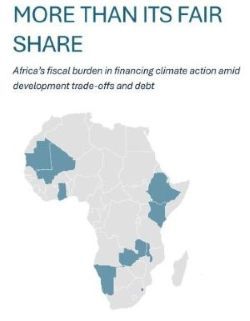
This publication by DevTransform is based on the review of ten African country budgets, half of which are African LDCs. DevTransform analysed direct climate budget allocations against key social and economic programmes to understand the opportunity cost governments face.
Focusing on social protection, DevTransform found in several countries,
climate allocations are substantial enough to replace or exceed core social protection programmes. Read more
|
| |
|
| |
|
| |
|
| |
South Africa’s ‘welfare fraud’ crackdown |
| |
|
| |
Public concern about fraud in South Africa’s social grant system has grown sharply in recent years. In response, the government has introduced stricter surveillance, biometric checks and large-scale verification processes aimed at rooting out fraud. However, these measures often misidentify wrongdoing and place the burden of policing on elderly, disabled and low-income beneficiaries.
This factsheet, published by the IEJ, examines where fraud actually occurs and how current anti-fraud efforts are harming the very people social protection is meant to support. Read more
|
| |
|
| |
|
| |
|
| |
Bank Beyond the World Bank: The Fight for Universal Social Protection in the Global South |
| |
|
| |
By Matthew Greenslade.
In this open access book, Matthew Greenslade sheds some much-needed light on the damage being done by the World Bank's insistence on pursuing a poverty-targeted approach to social protection in lower income countries, while also describing some of the successes in the grassroots fights for a more universal approach.
You can now get a hard copy of the book on Amazon or Bloomsbury’s website and the open access version of the book is also available on the Bloomsbury Collections website, made possible by generous funding from Act Church of Sweden. Read more
|
| |
|
| |
|
| |
|
| |
Meetings of the GCSPF |
| |
|
| |
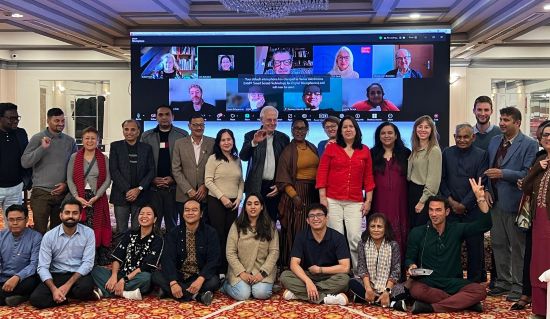
The Core Team Strategy Meeting and the Regional Meetings took place in Islamabad, Pakistan, in December 2025.
These meetings provided an opportunity to bring together members of the Core Team and Coalition members mainly from the region to strengthen the work of the Coalition and its working groups, as well as to hear updates on current regional developments and advocacy priorities.
|
| |
|
| |
|
| |
|
| |
WELCOME TO OUR NEW MEMBERS |
| |
|
| |
Action Le Vert - ALV |
| |
|
| |
ALV est une Organisation Non Gouvernementale de droit congolais créée le 04 juillet 2001 suite aux multiples difficultés liées aux atrocités causées par les guerres à répétition de 1996 (AFDL), de 1998 (RCD) et d’autres rebellions causées par des troupes tant internes qu’externes. Cette situation a été à la base de plusieurs évènements malheureux qui ont plongé les populations de l’Est dans des conditions inhumaines notamment les déplacements massifs des populations, les pillages, les viols, la dévastation des champs, les massacres des populations. Read more
|
| |
|
| |
|
| |
|
| |
Arab NGO Network for Development - ANND |
| |
|
| |
 |
ANND is an independent, democratic and civil network, established in 1997, aimed at strengthening and empowering civil society and promoting the values of democracy, respect for human rights and sustainable development in Arab countries. Which is all consistent with the International Bill of Human Rights and the freedom and dignity of the individual, respect for pluralism, equitable distribution of wealth, preservation of the cultural heritage of the region, and to achieve the development priorities of local communities.
ANND consists of 9 national networks and 23 NGOs operating in 12 Arab countries.
ANND’s work is organized according to three main areas: Strengthening the capacity and the role of CSOs in advocacy and lobbying in the field of economic and social policy- making in the Arab region; Strengthening the spaces available for CSOs' participation in economic and social policy-making at the national, regional, and international levels; Promoting and developing the knowledge materials available in the Arab region related to the role of civil society.Read more
|
| |
|
| |
|
| |
|
| |
AwazCDS-Pakistan |
| |
|
| |
 |
AwazCDS-Pakistan is a national level non-governmental organization striving for rightful spaces and choices of life for our future generations. They are empowering marginalized communities across Pakistan since 1995. AwazCDS-Pakistan follows human rights-based approaches and strengths local civil societies to implement its developmental programs. They promote local agendas evolved through the meaningful inclusion of local communities and influence related stakeholders and governments for policy level reforms.
Universal Social Protection of marginalized communities including older people, minorities and destitute (widows and single mothers) is one of our key campaigns in Pakistan. The campaign is being support by GCAP & Bread for the World. Apart from community level sensitization AwazCDS-Pakistan also generate evidence ad well as carry out policy level advocacy in Pakistan and at regional and global level for the cause of universal social protection. Very recently we have launched the Country Position Paper on the Status of Universal Social Protection in Pakistan at WSSD2, Doha, Qatar. Read more
|
| |
|
| |
|
| |
|
| |
Foundation for Ageing and Inclusive Development - FAID |
| |
|
| |
FAID is a national organisation of Pakistan that works on issues related to ageing, with a focus on the rights, wellbeing, and meaningful inclusion of older people in both humanitarian and development policies and programmes. FAID is a member of the HelpAge International network.
Social protection is one of their core areas of engagement. FAID advocates for the inclusion of older men, women, and transgender individuals—both with and without disabilities—in national social protection initiatives. FAID has also conducted several studies on Pakistan’s social protection programmes to inform policy and practice. Read more
|
| |
|
| |
|
| |
|